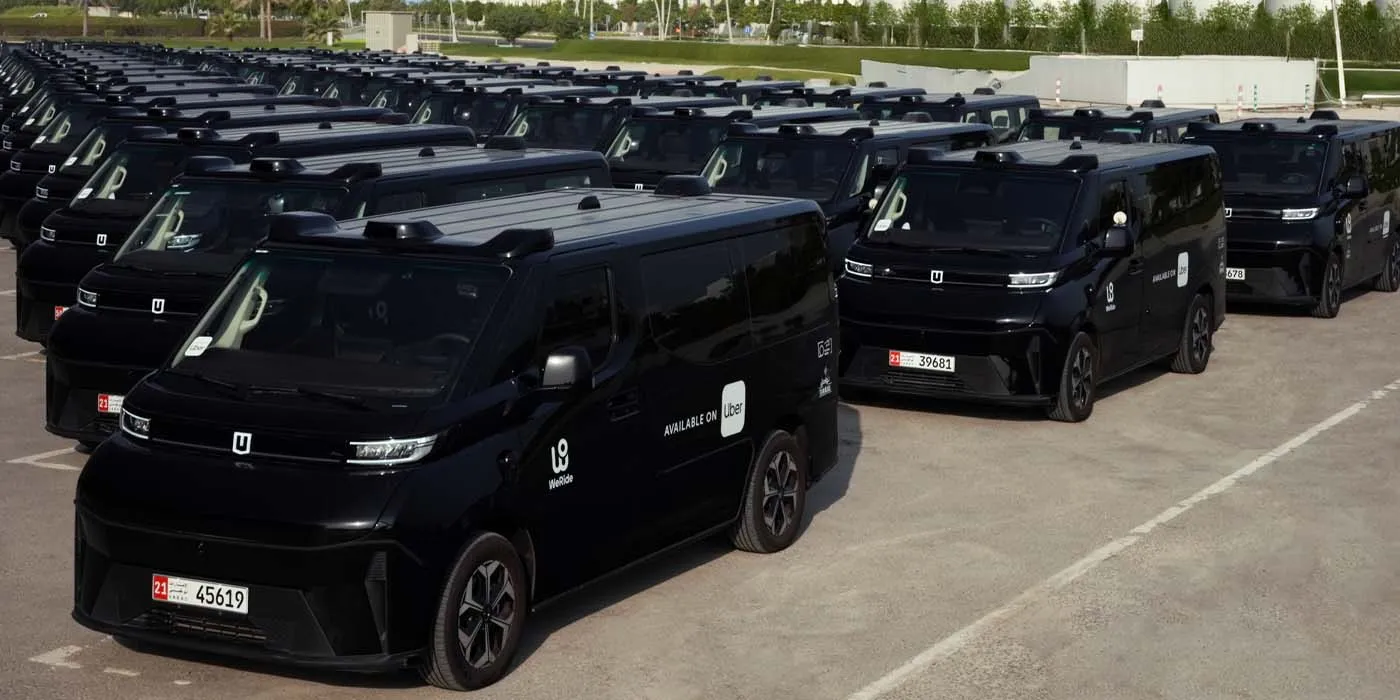
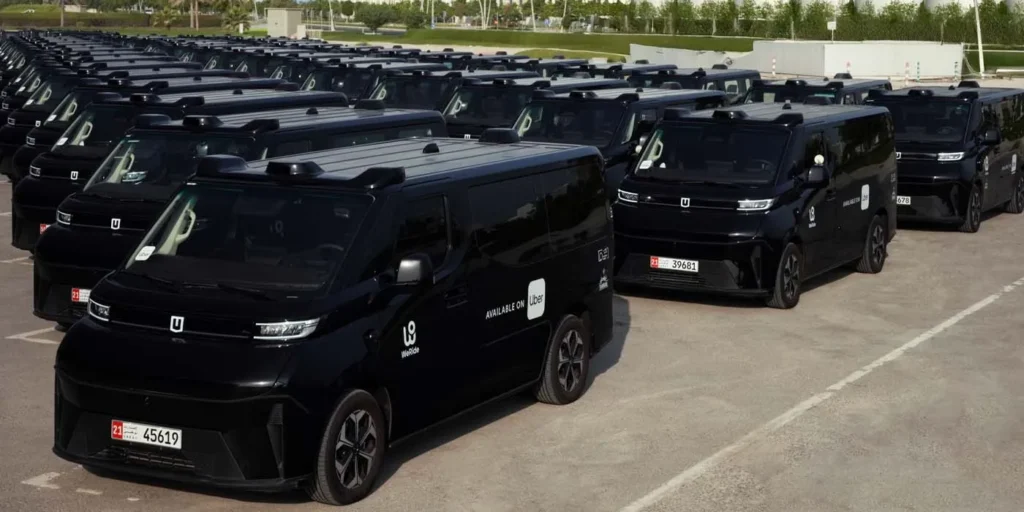
the future of urban mobility has taken a major leap forward: Uber, in partnership with self-driving car specialist WeRide, has officially launched fully driverless — no human behind the wheel — robotaxi services in Abu Dhabi, UAE. This historic milestone marks the first-ever commercial deployment of true driverless taxis in the Middle East.
Starting in designated zones on Yas Island, customers can now hail a robotaxi right from the Uber app — either via standard ride categories like UberX or Uber Comfort, or via a new “Autonomous” ride-option introduced globally by Uber.
🚖 What’s Changed: From Supervised to Fully Driverless
- This is not a test-ride or pilot — the robotaxi service is now commercial and public, available to anyone in the approved zone.
- There is no “safety driver” or human operator onboard. The vehicles operate under Level-4 autonomy standards, meaning they can handle driving tasks independently within the approved are.
- The launch was possible after regulatory approval: the local transport authority — the Integrated Transport Centre (ITC) — granted a city-level driverless Robotaxi permit, a first outside the U.S. on Uber’s platform.
🌍 Why This Matters — For Abu Dhabi, the Middle East & Global Mobility
✅ 1. Proof that Robotaxis Work — Outside Labs and Big Tech Sandbox
For years, fully autonomous robotaxi ambitions remained limited to test zones in major U.S. or Chinese cities. With this rollout in Abu Dhabi, those ambitions are now real for a different region — hot climate, diverse traffic conditions, mixed urban zones. It validates autonomous driving tech in a new context.
✅ 2. Accessibility + Convenience — A Button Tap Away
Anyone with the Uber app can now order a fully driverless ride. No need for human drivers, no human delays. This could dramatically change how people move around — more flexible, efficient, and accessible mobility, especially for those without private cars.
✅ 3. Boost to Smart-City & EV/AV Ecosystem in UAE & Middle East
The launch aligns with ambitious urban-mobility modernization efforts across the UAE and Gulf region. The partnership between Uber, WeRide, and local authorities shows trust in autonomous EV tech and signals further investment and expansion in driverless mobility infrastructure.
✅ 4. Signals to Global Market: AVs Are Maturing, Expansion Is Likely
With success in Abu Dhabi, Uber & WeRide plan to scale this model — not just within UAE, but potentially to other cities, even outside Middle East. If replicable, this could accelerate global adoption of robotaxi services.
🧠 What Riders Should Know — Safety, Availability & How to Book
- Robotaxi rides are currently available within designated zones (starting with Yas Island).
- On the Uber app, riders can pick standard ride categories (UberX, Uber Comfort) or choose the “Autonomous” option to increase chances of getting a driverless car.
- Onboard the vehicle, riders have access to remote support via app/tablet — for safety, assistance, or any ride-related issues.
🔮 What’s Next: Global Expansion & What It Means for Urban Mobility
The Abu Dhabi launch appears to be just the beginning. According to Uber and WeRide:
- They plan to scale service across more areas of Abu Dhabi by end-2025
- They aim to roll out robotaxi operations in many more cities globally over the next several years — potentially making driverless rides a common urban mobility option worldwide.
If successful, this could reshape urban transport: fewer cars on roads, more shared mobility, reduced congestion, better access, and a major push toward electric + autonomous mobility.
🧭 Final Take — A Milestone for the Future of Transportation
With this launch, Uber and WeRide have turned years of autonomous-mobility promises into a real-world service in the Middle East. For everyday commuters in Abu Dhabi, it means cleaner, smarter rides at the tap of a button. For global mobility watchers, it signals that robotaxis are no longer a futuristic dream — they are happening now.
This development might just mark the beginning of a global wave of driverless, on-demand mobility — and if it works well, plenty more cities could follow.